
【新唐人2012年1月7日訊】最近,大陸媒體系列報導【2011食品安全報告】,回顧了2011年中國一系列有毒食品,並深入探討危害食品安全的因素﹔同時,中共當局食品監管部門的內幕也遭到披露。面對食品安全事件層出不窮,民眾的安危到底誰來負責?
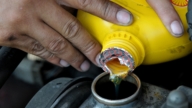
「哪類食品您最擔心?」大陸媒體《南方週末》12月份發起的問卷調查顯示,食用油排名第二,而「搜狐」網站的2011食品安全調查,食用油則是排名第一。媒體報導,中國每年有300萬噸「地溝油」回到餐桌。
回顧2011年中國食品安全亂象,從千奇百怪的非人類食用回收油,到各式各樣的有毒食品,民眾就像生活在一個有毒的世界。
繼2010年海南毒豇豆事件後,「避孕黃瓜」成為2011年蔬菜行業的「最毒」話題。緊接著還有「毒荳芽」、「毒韭菜」等。另外,農藥殘留、環境污染、重金屬超標,也嚴重威脅蔬菜安全,而硝酸鹽、亞硝酸鹽含量過高等安全隱患一直被忽略。
中山大學公共衛生學院營養學系主任蔣卓勤:「亞硝酸鹽對人體確實是有毒的,但是我們目前還沒有發現,吃蔬菜導致硝酸鹽的中毒事件,但是呢,不排除可能有一些慢性影響。」
也是保健食品檢測中心品質負責人的蔣卓勤還表示,中國的食品生產是分散生產、分散銷售。但是,不管如何都不該讓有毒的食品進入人的肚子裡。他認為,蔬菜使用農藥、化肥這個問題還不大,目前最大問題應該是食品添加劑。
蔣卓勤:「最大問題反而是濫用食品添加劑,或者濫用非食品食用物質,放到食品裡面去,這個可能是最大的問題,比如說,一些燒臘店、燒鵝啦、燒鴨,這個過期做法這種生產,濫用這些添加劑這一塊。」
抗生素、添加劑讓民眾害怕。事實上,不止燒臘店,連做饅頭的增白劑也令人擔憂。上海市民接受《新唐人》採訪時表示,中國人現在都生活在有毒的環境裡。
上海市民童利亞:「現在我們的食品問題,不是說一年兩年了,都好幾年了,最簡單的說,就是說我們中國吃的麵粉,就是做饅頭做包子的麵粉,現在裡面都要增加那種增白劑,這個問題我以前報紙上也看了,說他不抓呢,也抓了幾個企業出來,老百姓的理解是,這些被他抓出來的企業,都是沒有背景的,根本上沒有解決問題,到現在還是這樣,都幾年了,那個增白劑它都是過量的。」
上海市民韓忠明:「政府在先前的監督,應該說不力,導致企業造假成功,最重要的是老百姓健康都得到了威脅,現在老百姓都是事後知道政府查出來,像許多的食品不安全,就是數字、質量標準都在造假。」
民眾對食品安全監管體系和食品行業的信任越來越低。前不久,「思念」、「三全」、「灣仔碼頭」等大陸知名冷凍食品公司,都被檢出「金黃色葡萄球菌」。隨後,速凍麵米食品安全國家標準發佈,允許存在金黃色葡萄球菌。也就是說,速凍食品中,金黃色葡萄球菌將由「不得檢出」變為「限量檢出」。難怪消費者會說:又一個標準倒退了!
而監管食品安全第一線的官員被批評:連一頭豬都管不好,民眾問:「市面上究竟還有甚麼能吃?」
新唐人記者代靜、黃容、薛莉採訪報導。
*****************
Consumers: “Is There Still Edible Food on China’s Market?”
Recently, a special coverage by China’s media
reviewed the 2011 food safety issues.
The report looks at series of toxic foods,
and explores the factors that endanger food safety.
Meanwhile, inside stories of Chinese Communist Party’
(CCP) food regulatory system is disclosed.
Facing endless occurrences of food safety incidents,
who is to be held responsible for the public safety?
“What kind of food are you most worried about?"
asks a poll of Southern Weekly, where edible oils rank second.
While on the survey of food safety, initiated by Sohu.com,
the cooking oil tops the list as No. 1.
Media reported that each year, 3 million tons of swill-derived
cooking oils are being used in China.
China’s food safety chaos expanded in 2011. From recycled,
not-for-human consumption cooking oils to a wide range of toxic foods, the Chinese are like living in a toxic world.
Following Hainan poisonous bean incident in 2010,
the “contraceptive cucumber" tops the list of “most poisonous" vegetable in 2011 in China.
Later ensued “poisonous bean sprouts" and “poisonous leek,"
among others.
Moreover, pesticide residues, environmental pollution, heavy
metal contamination also seriously impact vegetables’ safety.
Yet high nitrate and nitrite levels and similar safety risks
have long been ignored.
Jiang Zhuoqin (Director, Nutrition Dept., Zhongshan Univ.):
“The nitrite is indeed toxic to humans.
So far, we haven’t found nitrate poisoning from vegetables.
But this doesn’t rule out the chronic effects it may cause."
A quality manager at a health food testing center, Jiang said,
China’s food has decentralized production and marketing.
But however operated,
toxic food should not be allowed for sale.
Jiang thinks the use of pesticides and chemical fertilizers
is not an issue yet. The biggest concern is the additives.
Jiang Zhuoqin: “The biggest issue is the food additives abuse.
In other words, abuse of non-edible substances in the food.
Like some roast-meat shops, when roasted goose or ducks are out-of-date,
they often ‘refresh’ them by using additives excessively."
Besides the antibiotics and additives that incite public panic,
the whitening agent used in steamed bread is also worrisome.
Shanghai residents say that the Chinese now live
in a toxic world.
Tong Liya (Shanghai resident): “China’s food safety issue
has been existing for many years.
To put it simply, whitening agent has been added in the flour.
The newspapers reported on it.
The authorities blamed some enterprises. But civilians found
the reason for the blame to be that none of those companies have connections with the authorities.
So the problem was not resolved essentially. It still remains,
and the use of whitening agent is still excessive."
Han Zhongming (Shanghai resident):
“The government’s regulation was poorly carried out.
However, it helped so many businesses
to make successful frauds.
The most important thing is that people’s health
has been under threat since.
Now the public cannot know,
until after a fraud case gets exposed.
Many foods are viewed as unsafe, for the figures
on food labels and the quality standards are false."
Food safety regulatory system and food industry in China
have gained the public’s lowest trust.
In some renowned frozen food brands, like Synear, Saquan,
Wanchai Ferry, were lately detected excessive bacteria.
After that, China’s National Food Safety Standard
on Quick Frozen Flour and Rice Products was released.
It stated that the presence of this particular bacteria,
staphylococcus aurous, is within the new permitted limit.
That is to say, for the frozen foods,
the criteria for staphylococcus aurous was lowered.
It is not surprising that the consumers say,
one more food safety criteria had retrogressed.
The CCP food safety supervision officials are criticized,
that “cannot even supervise feeding a pig.”
Consumers are worried, asking;
“Is there still edible food on China’s market?"
NTD reporters Dai Jing, Huang Rong and Xue Li